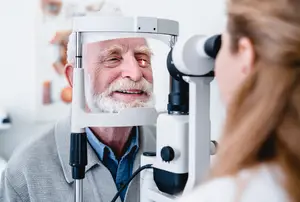
Cataract Surgery Lens Options in Burlington
Cataract surgery does more than remove a cloudy lens. It gives you the chance to choose how you want to see, moving forward.
If you’ve recently been diagnosed with cataracts or are considering surgery, this page will help you understand your lens options and how they can affect your vision after treatment.
During surgery, your natural lens is replaced with a clear artificial lens called an intraocular lens, or IOL. What many patients don’t realize is that they have choices about how the new lens performs.
At Drs Eyecare Center, we help you understand those options so you can choose the vision that fits your life, not just settle for the basics.
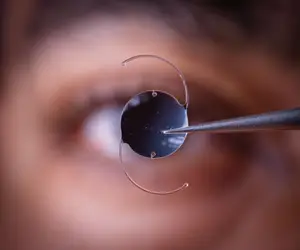
What Is an Intraocular Lens (IOL)?
An intraocular lens, or IOL, is a clear artificial lens that replaces your eye’s natural lens during cataract surgery.
When a cataract forms, the natural lens becomes cloudy, making vision blurry, dull, or harder to rely on. Cataract surgery removes that lens and replaces it with an IOL to restore clarity.
This is your opportunity to improve how you see.
Depending on the lens you choose, your IOL can:
-
Focus at one distance
-
Reduce your need for glasses
-
Help correct astigmatism
-
Improve how you see across multiple distances
Not All Cataract Surgery Is the Same
Standard cataract surgery typically uses a basic monofocal lens designed to restore clear vision at one distance, usually far away.
This means many patients still need:
-
Reading glasses
-
Computer glasses
-
Or multiple pairs for different tasks
For some patients, that’s enough. For others, it feels like settling for less than what modern cataract surgery can offer.
That’s why many patients today explore premium IOL options designed to reduce reliance on glasses and better match their daily routine.

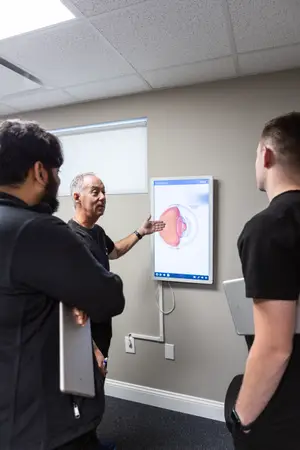
Understanding Your Cataract Lens Options
There isn’t a one-size-fits-all answer. The right intraocular lens depends on how you use your eyes every day.
Monofocal lenses focus at one distance, usually far.
They are reliable and widely used, but most patients will still need glasses for:
-
Reading
-
Phone use
-
Computer work
This option is often chosen when simplicity or cost is the priority.
Premium IOLs are designed to expand your visual range and reduce your dependence on glasses.
They can help you:
-
Move through your day with less reliance on glasses
-
Handle more daily tasks without switching eyewear
-
Improve both distance and near vision
This is often the difference between seeing clearly and seeing conveniently.
Most patients are never told they have this choice unless they ask.
Multifocal IOLs are designed to help you see at multiple distances, near, intermediate, and far.
These lenses allow many patients to:
-
Read a phone or a book
-
Work on a computer
-
Drive comfortably
Options such as AcrySof IQ ReSTOR and Tecnis Multifocal are commonly used.
Many patients describe this as being able to go through their day without constantly thinking about where their glasses are.
Your eyes and brain work together over time to adjust to the new visual system, and not every patient is a perfect candidate. A consultation helps determine if this option fits your needs.
Accommodating IOLs are designed to shift slightly within the eye, helping you focus more naturally at different distances.
Lenses like Crystalens are designed to:
-
Provide strong distance and intermediate vision
-
Improve transitions between tasks
-
Reduce glare or halos for some patients
They are often a good fit for patients who want a more natural visual experience, especially for driving and screen use.
If you have astigmatism, your vision may be blurred due to the shape of your eye.
Toric IOLs correct astigmatism during cataract surgery, helping provide:
-
Sharper, clearer distance vision
-
Less dependence on glasses after surgery
This is an important option that many patients don’t realize is available.
In some cases, yes.
Because each eye is slightly different, your surgeon may recommend using different IOL types in each eye to achieve balance.
For example:
-
One eye may be set for distance
-
The other may support near or intermediate vision
This approach can reduce the need for multiple pairs of glasses while keeping vision comfortable.
When choosing an intraocular lens, we consider:
-
Your daily activities
-
Screen use and reading habits
-
Night driving
-
Your comfort with wearing glasses
The question is not just “Will I see better?” It’s “How do I want to live with my vision after surgery?”
What to Expect After Cataract Surgery
No matter which IOL you choose, cataract surgery is designed to improve:
-
Clarity
-
Brightness
-
Color contrast
Many patients notice that colors appear more vivid and their vision feels sharper.
With premium IOLs, many patients also experience:
-
More visual freedom
-
Greater flexibility in daily life
Your vision will continue to improve as your eyes heal and adjust

Schedule Your Cataract Lens Consultation
Choosing your lens is one of the most important decisions in cataract surgery.
You don’t have to figure this out on your own.
At Drs Eyecare Center, we take the time to explain your options clearly and help you choose what fits your life and vision goals.
Call (609) 386-0202 or request an appointment to discuss your cataract surgery lens options.